
Navel Piercing vs Floating Navel: Which Option Fits Your Anatomy Best
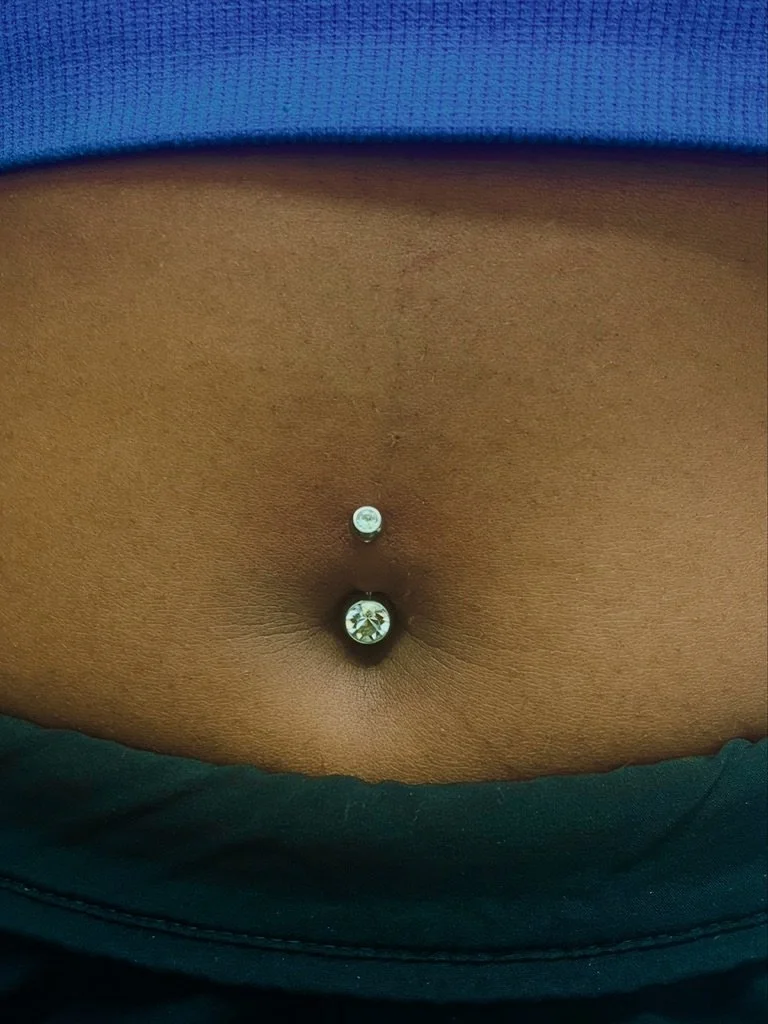
Navel piercings remain one of the most popular body modifications in Atlanta, especially during warmer months when crop tops, swimwear, and active lifestyles bring more attention to midriff fashion.
However, many people are surprised to learn that not everyone is a candidate for a traditional navel piercing.
Your anatomy plays a significant role in determining which style will heal properly and look its best over time.
If you've been searching for a navel piercing near me or researching your options at a body piercing Atlanta studio, understanding the difference between a traditional navel piercing and a floating navel piercing can help you make an informed decision.
The right choice is not about trends. It's about selecting a piercing that works with your body, not against it.
Quick Comparison: Traditional vs Floating Navel Piercing
Feature Traditional Navel Piercing Floating Navel Piercing
Best for Defined upper navel ridge Flat, collapsing, or shallow navels
Jewelry Style Decorative top and bottom ends Decorative top end only
Visibility Both ends visible Bottom end hidden inside the navel
Pressure on Piercing Moderate Reduced
Healing Comfort Depends on anatomy Often more comfortable for suitable candidates
Rejection Risk Higher if anatomy is unsuitable Lower for challenging anatomy
What Is a Traditional Navel Piercing?
A traditional navel piercing passes through the upper rim of the navel using a curved barbell with visible jewelry at both ends.
For this piercing to heal correctly, you need a pronounced lip or ridge of tissue above the navel that can securely support the jewelry.
When performed on suitable anatomy, traditional navel piercings offer:
Balanced appearance
Greater jewelry variety
Strong long-term stability
Classic aesthetic appeal
However, not everyone has the necessary anatomy.
A professional piercer should always assess your navel before recommending this style.
What Is a Floating Navel Piercing?
A floating navel piercing is specifically designed for clients whose anatomy may not support a traditional navel piercing.
Instead of using jewelry with visible decorative ends on both sides, a floating navel typically features:
A decorative top piece
A small flat disc or ball inside the navel
This design reduces pressure on the lower portion of the piercing channel.
Floating navels work particularly well for people with:
Flat navels
Shallow navels
Collapsing navels
Navel tissue that folds when sitting
Many experienced piercers in Atlanta recommend floating navels because they provide a safer alternative for anatomy that may otherwise be prone to irritation or rejection.
Why Anatomy Matters More Than Body Type
One of the biggest misconceptions about navel piercings is that body shape determines whether you can get one.
In reality, anatomy matters far more than body type.
A person of any size may have anatomy that is suitable for a traditional navel piercing or better suited for a floating navel.
Professional piercers evaluate several factors, including:
The depth of your navel
The amount of tissue available
How your navel changes when sitting
The position of your belly button ridge
Skin tension around the piercing site
This is why consultations are essential.
Choosing jewelry based solely on appearance instead of anatomy can lead to complications.
The Association of Professional Piercers recommends working with experienced piercers who understand anatomy-based placement.
The "Collapsing Navel" Test
A simple anatomy assessment often used by professional piercers involves observing how your navel changes position when you sit down.
If your navel folds inward or closes significantly while seated, it may be considered a collapsing navel.
Traditional jewelry can place excessive pressure on this type of anatomy, increasing the risk of:
Irritation
Migration
Rejection
Extended healing times
A floating navel piercing reduces this pressure by eliminating the decorative lower end.
Healing Differences Between Traditional and Floating Navels
Both piercing styles generally require similar healing timelines.
Complete healing often takes between six and twelve months, depending on individual factors and aftercare habits.
However, floating navels may heal more comfortably for people with challenging anatomy because they experience less friction and pressure.
Factors that affect healing include:
Clothing choices
Activity level
Sleeping position
Hygiene habits
Climate conditions
In warm, humid environments like Atlanta, proper aftercare becomes especially important.
Sweat and friction can increase irritation around fresh piercings.
How Atlanta's Lifestyle Can Affect Navel Piercings
Atlanta's active culture often includes:
Outdoor festivals
Fitness classes
Summer events
Sports activities
These factors can impact healing.
If you regularly wear high-waisted clothing, exercise frequently, or spend significant time outdoors, discuss your routine with your piercer during your consultation.
Choosing the right season can make aftercare easier.
Jewelry Selection Matters
High-quality jewelry is essential for both traditional and floating navel piercings.
Recommended materials include:
Implant-grade titanium
Solid 14k or 18k gold
Niobium
Avoid low-quality metals that may contain nickel or other irritants.
For floating navels, specialized jewelry is particularly important because it is specifically designed to minimise pressure.
Your piercer should help you select jewelry that matches your anatomy and lifestyle.
Signs You May Need a Floating Navel Instead
You may be a better candidate for a floating navel if:
Your navel folds when sitting
You have a shallow belly button
You have previously experienced migration or rejection
Your piercer recommends anatomy-specific jewelry
You feel pressure or discomfort with standard navel jewelry
Remember that choosing a floating navel is not a compromise.
It is a custom approach designed to improve comfort, aesthetics, and healing outcomes.
How to Choose the Right Piercing Studio in Atlanta
Not every studio offers anatomy-specific navel piercings.
Look for a body piercing Atlanta studio that:
Provides in-depth consultations
Uses implant-grade jewelry
Has extensive navel piercing experience
Follows strict sterilisation procedures
Offers detailed aftercare guidance
The Centers for Disease Control and Prevention recommends choosing studios that prioritise hygiene and infection prevention practices.
Experienced piercers understand that successful navel piercings start with proper anatomy assessment.
FAQs
What is the difference between a floating navel and a traditional navel piercing?
A traditional navel piercing uses visible jewelry on both ends, while a floating navel uses a hidden lower end to reduce pressure and accommodate different anatomy.
Does a floating navel piercing hurt more?
No. Pain levels are generally similar for both piercing styles.
Can anyone get a traditional navel piercing?
No. Traditional navel piercings require sufficient tissue and a defined upper ridge for proper healing.
How do I know which navel piercing is right for me?
A professional piercer should evaluate your anatomy during a consultation to determine the best option.
Can a floating navel piercing be changed to a traditional piercing later?
In some cases, yes. If your anatomy changes or healing progresses well, your piercer may recommend alternative jewelry options in the future.
Final Thoughts
Choosing between a traditional navel piercing and a floating navel piercing is not about following trends or copying someone else's look.
It is about respecting your unique anatomy.
The best navel piercing is the one that fits your body comfortably, heals properly, and supports long-term success.
In Atlanta, experienced piercers understand that anatomy-first decisions lead to better outcomes and happier clients.
If you are considering a navel piercing, schedule a consultation with a trusted professional who can assess your anatomy and recommend the option that works best for you.