
Tattoo Placement Pain Guide: What Atlanta Clients Say Hurts Most
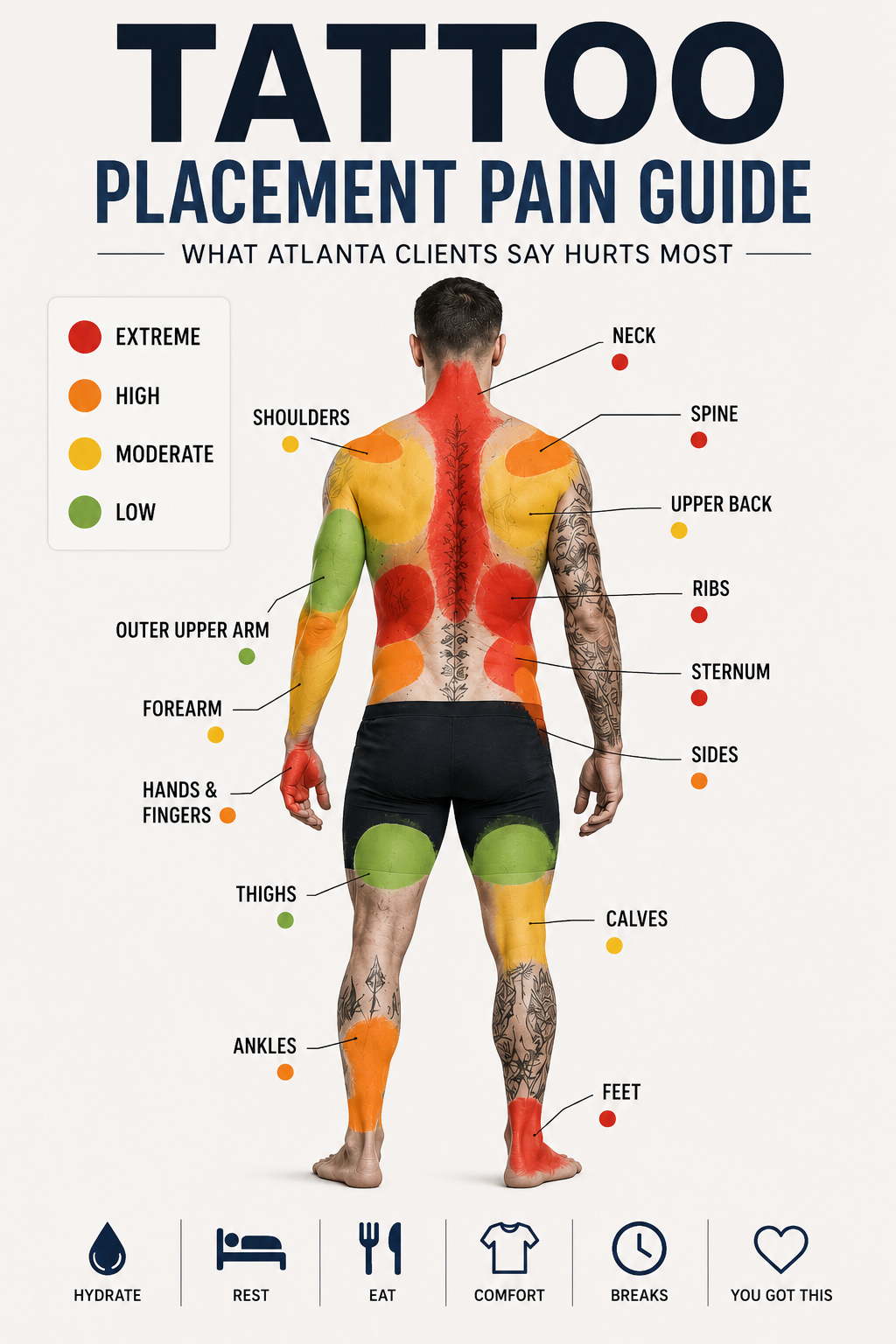
Getting a tattoo always comes with one big question: “How much is this going to hurt?”
The truth is, tattoo pain is different for everyone. Pain tolerance, body type, skin sensitivity, placement, and tattoo style all play a role. Still, after talking with tattoo clients and artists around Atlanta, certain body areas consistently come up as the most uncomfortable.
That does not mean you should avoid those placements. It simply helps to know what to expect before sitting in the chair.
If you are planning your next tattoo, this guide breaks down the areas clients say hurt the most, why some spots are more painful than others, and how to prepare for your appointment.
Why Tattoo Placement Affects Pain
Tattoo machines repeatedly insert needles into the skin at high speed. Some body areas handle that sensation better than others.
Pain levels usually depend on:
Nerve density
Skin thickness
Bone proximity
Muscle and fat coverage
Sensitivity levels
Session length
Generally, areas with thinner skin and more exposed bone tend to feel more intense.
Most Painful Tattoo Placements According to Atlanta Clients
Rib Tattoos
Ribs consistently rank among the most painful placements.
Why?
Thin skin
Constant movement from breathing
Little fat cushioning
High nerve sensitivity
Many clients describe rib tattoos as sharp and intense, especially during longer sessions.
Still, rib tattoos remain popular because they create a sleek, dramatic look.
Spine Tattoos
Spine tattoos can look incredible, but they are rarely described as relaxing.
The spinal area contains:
Thin skin
Multiple nerve endings
Bone close to the surface
Vibration from the tattoo machine along the vertebrae can make sessions feel especially uncomfortable.
Clients researching professional tattoo artist Atlanta often ask about spine tattoo experience because placement precision matters heavily in this area.
Sternum Tattoos
Sternum tattoos are another placement many Atlanta clients warn about.
This area combines:
Thin tissue
Bone exposure
High sensitivity near the chest
Pain often increases near the centre of the chest and collarbone areas.
Despite that, sternum tattoos continue trending because of their bold visual impact.
Feet and Ankles
Feet and ankle tattoos may be small, but many people say they hurt more than expected.
Reasons include:
Thin skin
Minimal fat coverage
High nerve concentration
Constant friction from shoes
Healing can also feel irritating because feet experience regular movement and pressure.
Hands and Fingers
Finger tattoos look clean and minimalist, but they can be surprisingly painful.
Hands contain:
Numerous nerve endings
Thin skin
Frequent movement
Finger tattoos also tend to fade faster because of constant hand use and skin turnover.
People interested in fine line tattoos in Atlantaoften choose fingers for minimalist designs, but touch-ups may be needed over time.
Neck Tattoos
Neck tattoos are highly visible and stylish, but sensitivity is usually high.
The neck has:
Thin skin
Strong nerve sensitivity
Little muscle cushioning
Front neck tattoos often feel more intense than side placements.
Tattoo Areas That Clients Say Hurt Less
Not every tattoo placement is extreme.
Many Atlanta clients describe these areas as more manageable:
Outer Upper Arm
One of the most beginner-friendly spots due to muscle coverage and lower sensitivity.
Forearm
A popular placement because pain levels are usually moderate.
Thigh
The upper thigh often feels easier because of thicker skin and muscle cushioning.
Calves
Pain varies, but many people tolerate calf tattoos relatively well.
Does Tattoo Style Affect Pain?
Yes. The tattoo style itself can influence how painful the session feels.
Fine Line Tattoos
Often use smaller needles and lighter pressure, which some clients find easier.
Heavy Blackwork
Dense shading and saturation may increase discomfort because the skin is worked repeatedly.
Colour Tattoos
Large colour packing sessions can become more uncomfortable over time.
Realism Tattoos
Long sessions with heavy detail may increase sensitivity due to prolonged exposure.
Why Session Length Matters
Even manageable placements can become painful during long appointments.
After several hours:
Skin becomes irritated
Swelling increases
Sensitivity builds up
Mental fatigue kicks in
That is why many artists recommend splitting large tattoos into multiple sessions.
Clients searching for tattoo consultation Atlantaoften discuss session planning before starting larger projects.
How Atlanta’s Climate Can Affect Tattoo Comfort
Atlanta’s heat and humidity may not change the tattoo process itself, but they can affect comfort levels during healing.
Hot weather can increase:
Sweat
Clothing friction
Skin irritation
General discomfort
People getting tattoos during summer months often prefer loose clothing and breathable fabrics during recovery.
Tips to Make Tattoo Sessions Easier
Get Good Sleep
Being well-rested helps improve pain tolerance.
Eat Before Your Appointment
Low blood sugar can make sessions feel worse.
Stay Hydrated
Healthy skin often handles tattooing better.
Avoid Alcohol
Alcohol may increase bleeding and sensitivity.
Wear Comfortable Clothing
Choose clothing that allows easy access to the tattoo area.
Take Breaks if Needed
Professional artists understand that some placements are intense.
Pain Tolerance Is Different for Everyone
One important thing to remember: tattoo pain is subjective.
Some clients barely react during rib tattoos. Others struggle with smaller ankle tattoos.
Factors that influence pain include:
Stress levels
Sleep quality
Hydration
Anxiety
Hormones
Previous tattoo experience
Trying to compare pain experiences exactly from person to person is difficult.
Tattoo Healing Can Feel Different Than Tattooing
Many clients focus only on appointment pain, but healing can sometimes feel more annoying than the actual tattoo session.
Common healing sensations include:
Tightness
Itching
Mild soreness
Peeling
The Mayo Clinic tattoo safety guide explains why proper aftercare is important for reducing irritation during recovery.
American Academy of Dermatology skin care resources also provide helpful information about protecting healing skin.
For hygiene standards and workplace safety, the OSHA bloodborne pathogens workplace safety guidance explains why professional sanitation practices matter in tattoo environments.
Final Thoughts
Tattoo pain is real, but it is also temporary. Understanding which placements tend to feel more intense can help you prepare mentally and physically before your appointment.
While ribs, spine, feet, sternum, and hands are commonly described as the most painful tattoo areas, everyone experiences pain differently. Placement, tattoo style, session length, and personal tolerance all affect the experience.
The best approach is choosing a placement that fits both your design goals and your comfort level. A well-planned tattoo with a skilled artist is usually worth the temporary discomfort.
FAQs
1. What tattoo placement hurts the most?
Ribs, spine, sternum, feet, and hands are commonly reported as the most painful areas.
2. Are fine line tattoos less painful?
Some clients find fine line tattoos easier because they often use lighter pressure and smaller needles.
3. Do tattoo pain levels change during long sessions?
Yes. Skin sensitivity usually increases over time during longer appointments.
4. Does body fat reduce tattoo pain?
Areas with more muscle or fat cushioning are often described as less painful.
5. Can weather affect tattoo healing?
Hot and humid weather may increase sweat and irritation during recovery.