
Needle Piercing vs Gun Piercing: What Atlanta Professionals Want Clients to Understand
When getting a new piercing, many people focus on jewellery style or placement first. However, one of the most important decisions happens before the jewellery is even inserted: choosing between needle piercing and gun piercing.
In Atlanta, professional body piercers consistently recommend needle piercing for most procedures because of safety, precision, hygiene, and healing advantages. While piercing guns are still commonly found in mall kiosks and retail stores, many experienced professionals believe they present limitations that clients should understand before making a decision.
If you are researching safe body piercing methods in Atlanta, this guide explains the key differences between needle piercing and gun piercing, how each method affects healing, and why professional piercing studios often prefer needles.
Understanding the Difference Between Needle and Gun Piercing
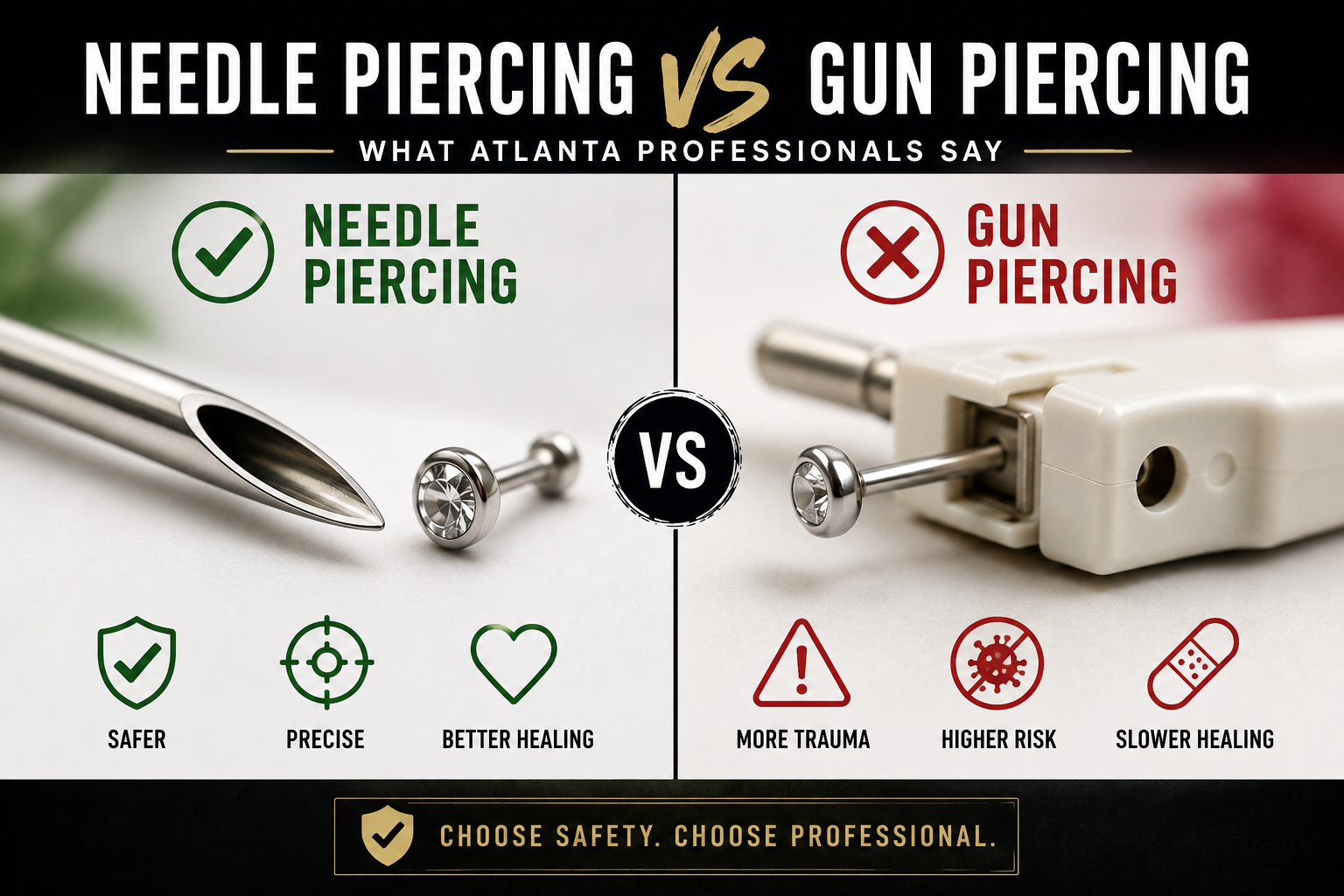
The biggest difference between the two methods is how the skin is penetrated.
Needle Piercing
A professional piercing needle is:
Hollow
Extremely sharp
Sterile and single-use
Designed specifically for body piercing
The needle creates a clean opening through the tissue while minimising unnecessary trauma.
Gun Piercing
A piercing gun uses blunt-force pressure to push jewellery directly through the skin.
Instead of cutting a clean opening, the jewellery forces its way through tissue, which may create more trauma during the procedure.
This distinction plays a major role in healing outcomes.
Why Professional Piercers Prefer Needles
Most professional piercers in Atlanta recommend needles for several reasons:
Better precision
Cleaner tissue penetration
Reduced swelling
Lower risk of tissue trauma
Improved jewellery placement
Easier sterilisation procedures
The Association of Professional Piercers safety standards strongly supports the use of sterile single-use needles instead of piercing guns for professional body piercing procedures.
Needle piercing is considered the industry standard in most professional studios.
Tissue Trauma and Healing Differences
One of the biggest concerns with piercing guns is tissue damage.
Needle Piercing and Tissue Response
Because piercing needles are hollow and sharp, they create a cleaner opening that often leads to:
Less swelling
Less pressure on surrounding tissue
Smoother healing
Better jewellery positioning
Gun Piercing and Tissue Compression
Piercing guns force jewellery through the tissue using pressure.
This may cause:
Increased swelling
Bruising
Tissue tearing
Greater irritation during healing
These issues can become more noticeable in cartilage piercings.
Why Cartilage Piercings Require Extra Care
Cartilage has lower blood circulation than softer tissue such as earlobes.
Because of this, cartilage piercings already heal more slowly and are more sensitive to trauma.
Using excessive force on cartilage may increase the likelihood of:
Prolonged swelling
Irritation bumps
Delayed healing
Cartilage damage
Sterilisation and Hygiene Concerns
Professional hygiene standards are one of the biggest reasons many Atlanta piercers recommend needle piercing.
Needle Piercing Hygiene
Professional piercing needles are:
Pre-sterilised
Individually packaged
Single-use only
This reduces the risk of cross-contamination.
Gun Piercing Hygiene Challenges
Many piercing guns contain plastic components that cannot always be fully sterilised using medical-grade autoclave procedures.
This creates concerns about:
Surface contamination
Bacteria exposure
Cross-contact between clients
The OSHA bloodborne pathogens workplace safety guidance explains why sterilisation and contamination prevention are essential in procedures involving skin penetration.
Jewellery Quality Also Matters
Jewellery quality is just as important as piercing technique.
Professional studios often use:
Implant-grade titanium
High-quality gold
Platinum
Internally threaded jewellery
Mall piercing systems may use lower-quality jewellery materials that increase irritation risk for some clients.
People researching hypoallergenic body piercing Atlanta options often benefit from higher-quality materials during healing.
Why Precision Matters in Piercing Placement
Piercing needles allow professionals to:
Adjust angles carefully
Accommodate anatomy differences
Improve symmetry
Reduce pressure on surrounding tissue
This precision becomes especially important for:
Nose piercings
Cartilage piercings
Curated ear styling
Septum piercings
Professional piercers also evaluate anatomy before performing the procedure, helping improve both comfort and appearance.
Common Myths About Piercing Guns
Myth 1: Gun Piercing Is Less Painful
Pain varies by individual, but many clients report that needle piercings feel smoother because the needle is designed for clean penetration rather than blunt pressure.
Myth 2: Gun Piercing Heals Faster
Healing depends on multiple factors, but excessive tissue trauma may actually slow healing.
Myth 3: Guns Are Fine for Cartilage
Many professional piercers strongly discourage gun use on cartilage because cartilage is more vulnerable to pressure-related damage.
Why Aftercare Matters Regardless of Method
Even the best piercing technique still requires proper aftercare.
Common aftercare recommendations include:
Cleaning with sterile saline solution
Avoiding unnecessary touching
Keeping bedding clean
Avoiding harsh skincare products
Not changing jewellery too early
The Mayo Clinic tattoo and piercing safety guide explains why aftercare is critical for reducing irritation and supporting healthy healing.
Improper aftercare can create problems regardless of whether the piercing was done with a needle or gun.
Why Professional Studios Continue Moving Away From Piercing Guns
Modern piercing standards have evolved significantly over the years.
Many professional studios now avoid piercing guns because of concerns related to:
Sterilisation limitations
Tissue trauma
Precision issues
Jewellery quality
Healing complications
As education around piercing safety grows, more clients are specifically seeking professional needle piercing services.
Final Thoughts
When comparing needle piercing and gun piercing, most professional piercers in Atlanta recommend needles because of their precision, reduced tissue trauma, and stronger hygiene standards.
While piercing guns remain common in some retail environments, professional studios continue prioritising needle techniques for safer and more controlled procedures.
For clients considering a new piercing, understanding the differences between these methods can help support safer healing, better comfort, and improved long-term results.
FAQs
1. Why do professional piercers prefer needles?
Needles create cleaner openings, reduce tissue trauma, and support safer sterilisation practices.
2. Are piercing guns safe for cartilage?
Many professionals discourage gun use on cartilage because of pressure-related tissue damage risks.
3. Do needle piercings hurt more?
Pain varies, but many clients report needle piercings feel smoother and more controlled.
4. Can piercing guns be sterilised completely?
Some plastic piercing gun components cannot always undergo full autoclave sterilisation.
5. Does jewellery quality affect healing?
Yes. Higher-quality materials such as titanium may reduce irritation and improve comfort during healing.