
Needle Configurations Explained by Atlanta Tattoo Artists
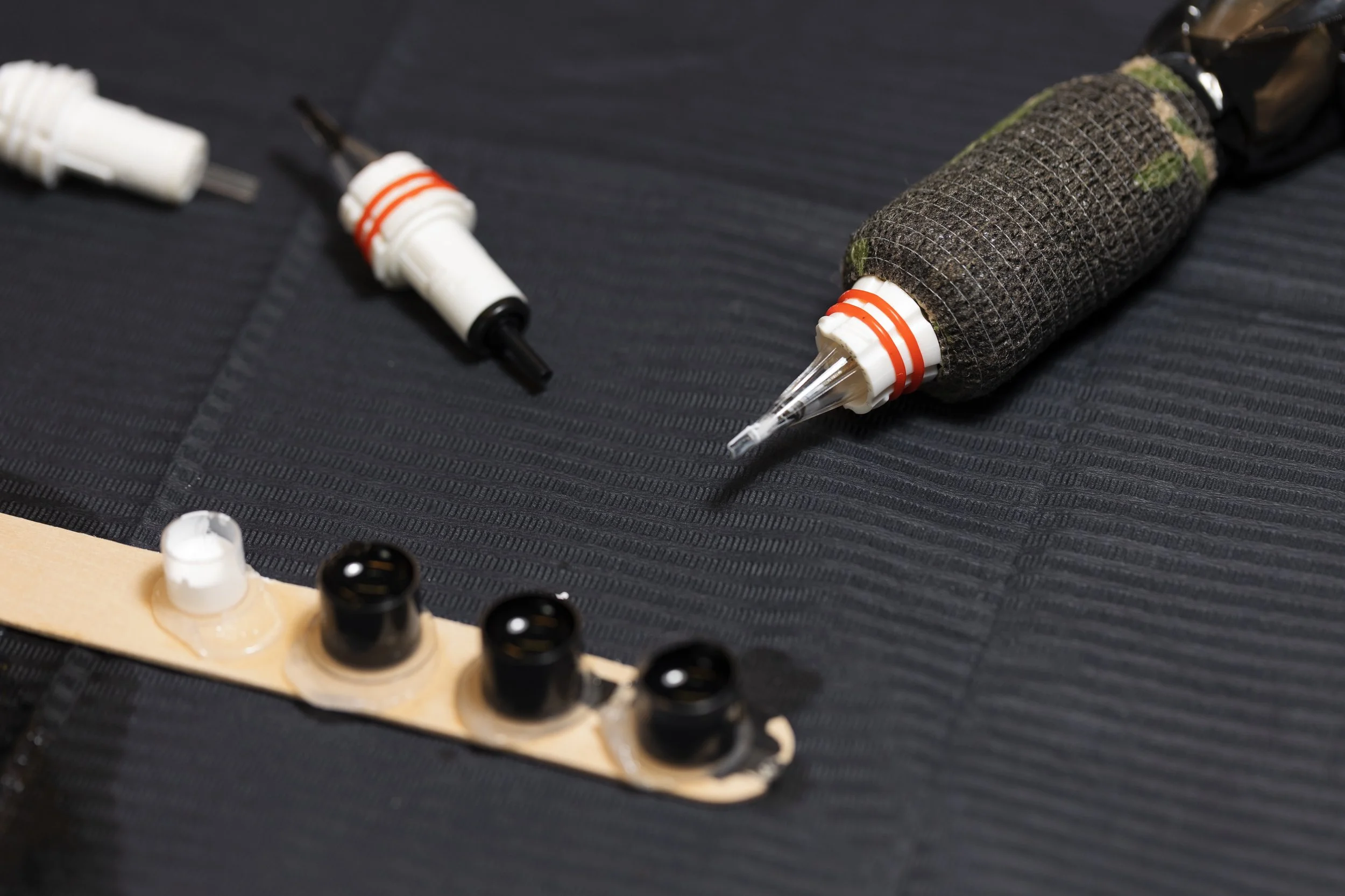
When people think about tattoos, they usually focus on the design or the ink color. But behind every clean line and smooth shading is a technical tool that most clients never see, the tattoo needle configuration.
Professional tattoo artists carefully choose different needle groupings depending on the effect they want to achieve. From crisp outlines to soft gradients, each configuration plays a specific role in the tattooing process. Understanding these tools provides insight into how tattoo art is created and why experienced artists emphasize proper technique.
In studios across Atlanta, artists rely on 3 primary needle groupings: round liners, magnums, and shader needles. Each one serves a different purpose in building a tattoo layer by layer.
Why Tattoo Needle Configuration Matters
A tattoo machine does not use a single needle. Instead, multiple needles are grouped together in specific arrangements known as configurations.
These configurations influence:
Line thickness
Ink flow
Skin penetration patterns
Shading smoothness
Color packing efficiency
The choice of needle directly affects the final appearance of a tattoo. Using the wrong configuration can cause uneven lines, patchy shading, or unnecessary trauma to the skin.
That is why skilled artists select needle types based on the stage of the tattoo and the level of detail required.
Round Liner Needles: Precision for Outlines
Round liner needles are one of the most commonly used configurations in tattooing. They are designed to produce clean, consistent lines.
How Round Liners Are Built
Round liners consist of several needles grouped tightly together in a circular formation. Because they are packed closely, the tips hit the skin almost simultaneously, creating a precise line.
Common round liner sizes include:
3RL (three needles)
5RL
7RL
9RL
The number refers to how many needles are grouped in the configuration.
What Round Liners Are Used For
Artists use round liners for:
Tattoo outlines
Fine line tattoos
Script lettering
Small detailed artwork
Smaller configurations like 3RL are ideal for delicate designs and intricate details. Larger liners create thicker outlines commonly seen in traditional tattoo styles.
Because outlining forms the foundation of most tattoos, round liners are often the first needles used during a session.
Round Shader Needles: Controlled Shading and Soft Edges
Round shaders resemble round liners but have a slightly different structure.
How They Differ from Liners
While both are arranged in circular formations, round shaders have needles spaced slightly farther apart. This allows more ink distribution across the skin.
Instead of producing a sharp line, they create softer transitions.
Common Uses for Round Shaders
Round shader needles are typically used for:
Small shaded areas
Light gradients
Soft shadow effects
Color blending in tight spaces
Because they deposit ink more gently, they help artists build shading gradually without oversaturating the skin.
They are especially useful in portraits or realism tattoos where smooth transitions are essential.
Magnum Needles: The Workhorse for Shading and Color
Magnum needles are considered one of the most versatile tools in tattooing.
Unlike round configurations, magnums arrange needles in two staggered rows. This structure covers more surface area with each pass of the machine.
Types of Magnum Needles
Magnums come in several variations:
Weaved Magnum (M1)
Needles are slightly spaced apart. This allows ink to flow smoothly for soft shading.
Stacked Magnum (M2)
Needles are packed tighter together, making them better for packing solid color.
Curved Magnum (CM)
The needle tips form a slight arc. This design helps reduce skin trauma while producing smoother gradients.
What Magnums Are Used For
Tattoo artists often choose magnums for:
Large shaded areas
Color packing
Smooth gradient shading
Background fills
Because magnums distribute ink across a wider area, they reduce the number of passes needed to achieve saturation. This can help minimize irritation during longer sessions.
Many artists consider magnums essential for large-scale work like sleeves or back pieces.
How Needle Size Affects Tattoo Detail
Beyond configuration type, tattoo needles also vary in diameter.
Common diameters include:
#10 gauge (0.30 mm)
#12 gauge (0.35 mm)
Thinner needles allow for finer detail and lighter shading. Thicker needles deliver stronger ink saturation.
Artists combine needle diameter with configuration size to control the tattoo’s appearance.
For example:
A 3RL with a small diameter is ideal for delicate linework
A 15M curved magnum can quickly shade large areas
This combination of size and grouping allows tattoo artists to adjust techniques depending on the design.
Skin Interaction: Why Needle Choice Impacts Healing
Tattooing involves depositing pigment into the dermis layer of the skin. The way needles enter and exit the skin influences how the body heals.
Certain configurations spread pressure more evenly across the skin surface. For example, magnum needles distribute impact across multiple points, which can reduce localized trauma during shading.
The body then begins its natural healing response, involving immune cells that stabilize the pigment particles within the dermis.
Organizations like the Alliance of Professional Tattooists emphasize the importance of proper equipment and technique to ensure safe tattooing practices.
Why Experienced Artists Switch Needles Mid-Session
If you watch a professional tattoo artist work, you may notice them switching needle cartridges during the session.
This is completely normal.
A typical tattoo process may look like:
Round liner for the outline
Round shader for small shadows
Magnum needles for larger shading and color packing
Each configuration helps build the tattoo in stages, similar to how painters use different brushes.
By layering techniques with specialized needles, artists achieve both precision and depth.
Modern Cartridge Systems
Many tattoo studios in Atlanta now use cartridge-style needles rather than traditional needle bars.
Cartridge systems allow artists to quickly swap needle configurations without changing the entire setup. This improves efficiency and maintains sterile conditions throughout the session.
Professional tattoo studios follow strict sanitation guidelines outlined by organizations such as the Centers for Disease Control and Prevention to prevent contamination and protect clients.
How Needle Configurations Shape Tattoo Style
Different tattoo styles rely heavily on specific needle types.
Examples include:
Fine Line Tattoos
Small round liners for extremely thin lines.
Traditional Tattoos
Medium to large round liners for bold outlines and magnums for solid color.
Realism Tattoos
Magnums and round shaders to build subtle gradients.
Black and Grey Tattoos
Curved magnums to create soft shading and depth.
Because of these variations, selecting the correct needle setup is just as important as choosing the right ink.
The Hidden Skill Behind Tattoo Tools
For clients, a tattoo may look like a simple process of drawing on skin. In reality, professional tattooing combines artistic talent with technical understanding of equipment.
Needle configurations, ink flow, machine speed, and skin anatomy all influence the final result.
Experienced artists spend years learning how to balance these factors so the tattoo heals properly and maintains its clarity over time.
Understanding tattoo needle types explained helps reveal the craftsmanship behind every piece of body art.
FAQs
What are the main tattoo needle types?
The most common types are round liners, round shaders, and magnum needles, each used for different stages of tattooing.
What needle is used for tattoo outlines?
Round liner needles are typically used to create clean outlines.
Why do artists use magnum needles?
Magnums cover a larger area, making them ideal for shading and color packing.
Do different needles affect tattoo pain?
Not directly, but larger groupings may distribute pressure more evenly across the skin.
Why do artists switch needles during a tattoo?
Different configurations produce different effects, so artists switch needles to handle outlining, shading, and coloring.